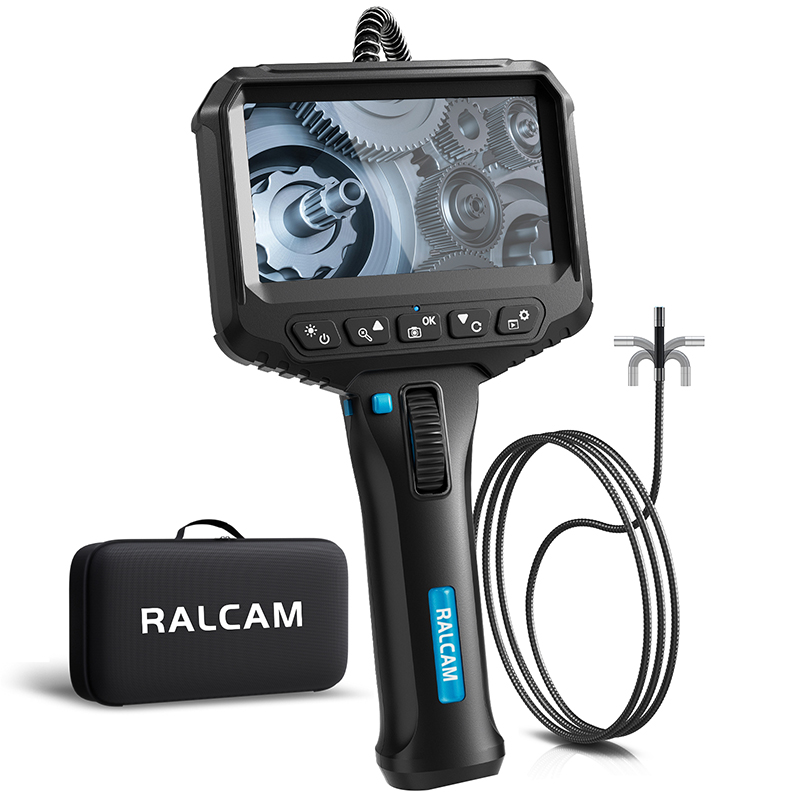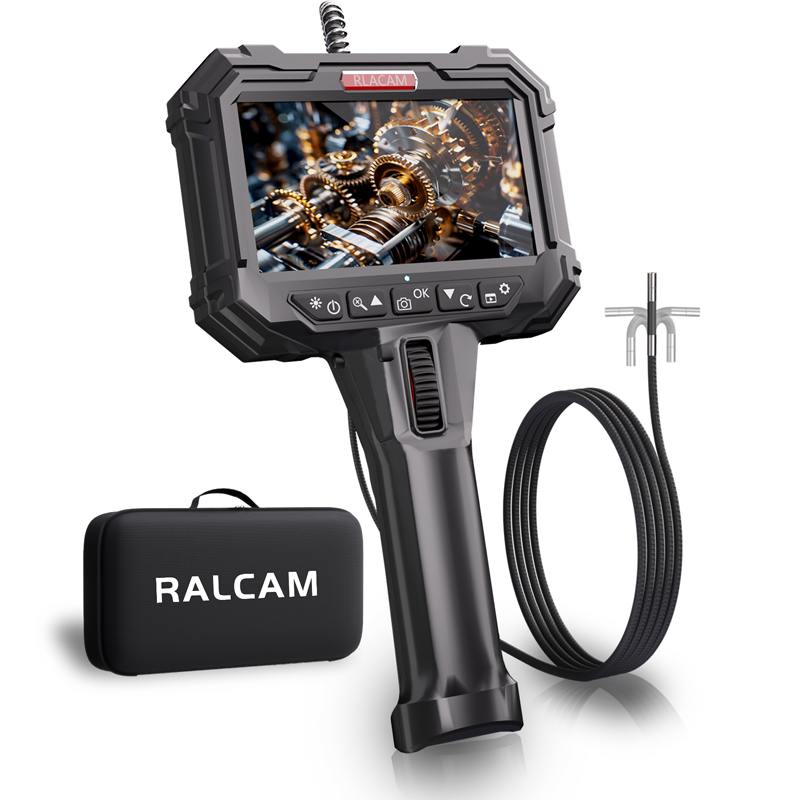
OEM & ODM Borescopes 15 years

 Susan
Susan  2026-10-08


A two-way endoscope supports controlled inspection when buyers match probe diameter, articulation, cable behavior, resolution, and phone workflow to the access task.
A successful selection begins with the smallest opening, the distance to the target, and the bends along the route. The selected RALCAM page lists 6.2 mm and 8.5 mm probe options, a 1 m probe length, and 180° articulation. Those values help define physical access, but buyers should confirm the exact configuration offered because the page also lists alternative resolution values and cable types.
Probe diameter is an access constraint rather than a general quality ranking. A smaller head may enter a narrower port, while a larger head may be appropriate where clearance is less restrictive. The opening should be measured at its tightest point, including fittings, bends, and any protective edges. Clearance also needs to account for withdrawal, because an insertion that is barely possible can still become difficult to recover safely.
The declared 180° articulation allows the viewing direction to be adjusted after insertion. That can help an operator examine a sidewall, valve area, duct surface, or other target that is not directly ahead. Articulation does not eliminate the need for a suitable access route. Buyers should consider bend radius, nearby obstructions, and whether the operator can steer and withdraw the probe without forcing the cable or camera head.
| Decision factor | Verified evidence | Buyer implication |
|---|---|---|
| Model | C106/C108S | Use the model reference in enquiries and sample records. |
| Probe diameter | 6.2 mm or 8.5 mm | Match the head to the verified minimum opening. |
| Probe length | 1 m | Confirm the target lies within the workable route. |
| Articulation | 180° | Plan steering around the actual access geometry. |
| Cable choice | Flexible soft cable or semi-rigid tube | Select behavior that suits routing and control. |

The page declares 1280 × 720 and 1600 × 1200 pixel options. Buyers should not assume which resolution belongs to which probe without a confirmed configuration sheet. Image usefulness also depends on focus distance, lighting, surface reflectivity, cleanliness, operator stability, and the compatible phone display. Resolution is one part of an inspection system rather than a stand-alone guarantee of defect recognition.
The handle supports one-click photo capture and video recording, allowing the operator to document the view without reaching for the phone screen. The built-in phone holder keeps a compatible device mounted during inspection. This arrangement can make the workflow more stable, but procurement teams should verify connector compatibility, software requirements, phone dimensions, and file-handling expectations before deployment.
For a two-way endoscope used across several teams, a simple recording convention is valuable. Operators can identify the asset, access point, direction, and sequence before capture, then preserve the original file with the work order. The device supplies imagery; acceptance limits and maintenance decisions still need to come from the applicable procedure and qualified personnel.
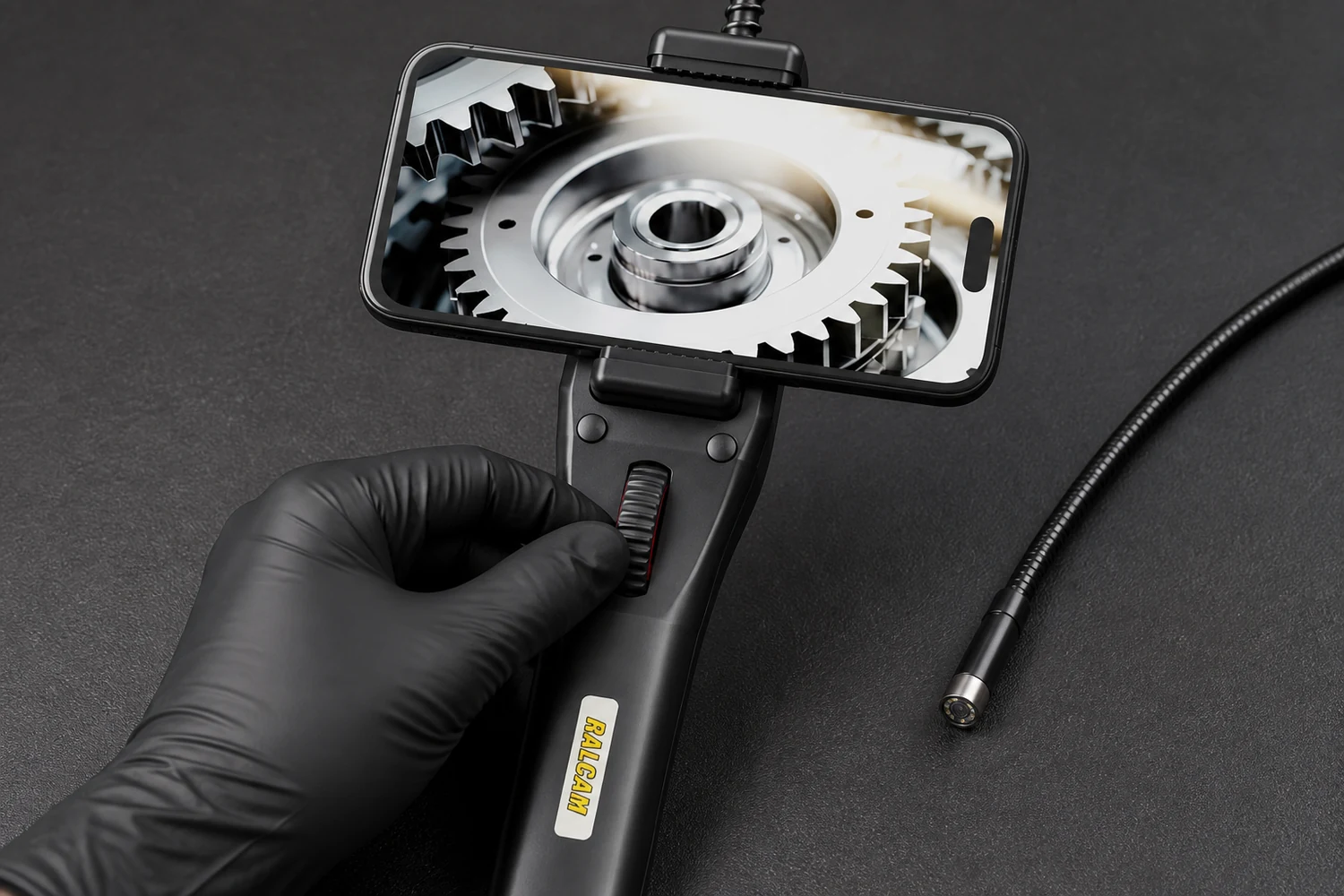
The product page offers a flexible soft cable or a semi-rigid tube. A flexible cable can follow an existing path, while a semi-rigid tube can provide more deliberate placement where the operator needs the probe to hold direction. Neither choice is universally superior. The correct behavior depends on the entry angle, gravity, internal obstacles, available hand position, and retrieval path.
Before insertion, the operator should identify the route, target, stopping points, and a safe withdrawal method. Forcing the probe can damage the equipment or the inspected assembly. The cable should be guided rather than twisted against an obstruction, and steering should be returned to a suitable position before withdrawal when the access geometry requires it. A dry practice on a representative path can reveal handling limits before field use.
Verified uses on the selected page include automotive repair, engine diagnostics, HVAC inspection, plumbing work, aerospace maintenance, and other limited-visibility tasks. These labels describe potential environments, not identical procedures. Each industry has different access controls, hazards, cleanliness requirements, documentation rules, and acceptance limits, so the same hardware may need a different operating plan.
For automotive inspection, the probe may help view internal engine or confined component areas that cannot be seen directly. The technician should confirm the access port, temperature, moving-part isolation, and acceptable probe size before entry. In HVAC inspection, duct geometry and surface condition may favor a particular cable behavior. The endoscope supports observation, but it does not replace diagnostic testing or the service manual.
Aerospace maintenance uses visual access within tightly controlled procedures, and findings may require interpretation by authorized personnel. Buyers should confirm that the proposed configuration fits the designated access point and documentation process. Plumbing work presents different concerns, including route length, bends, moisture, and retrieval. The product page supports these contexts, but the operator must apply task-specific precautions.
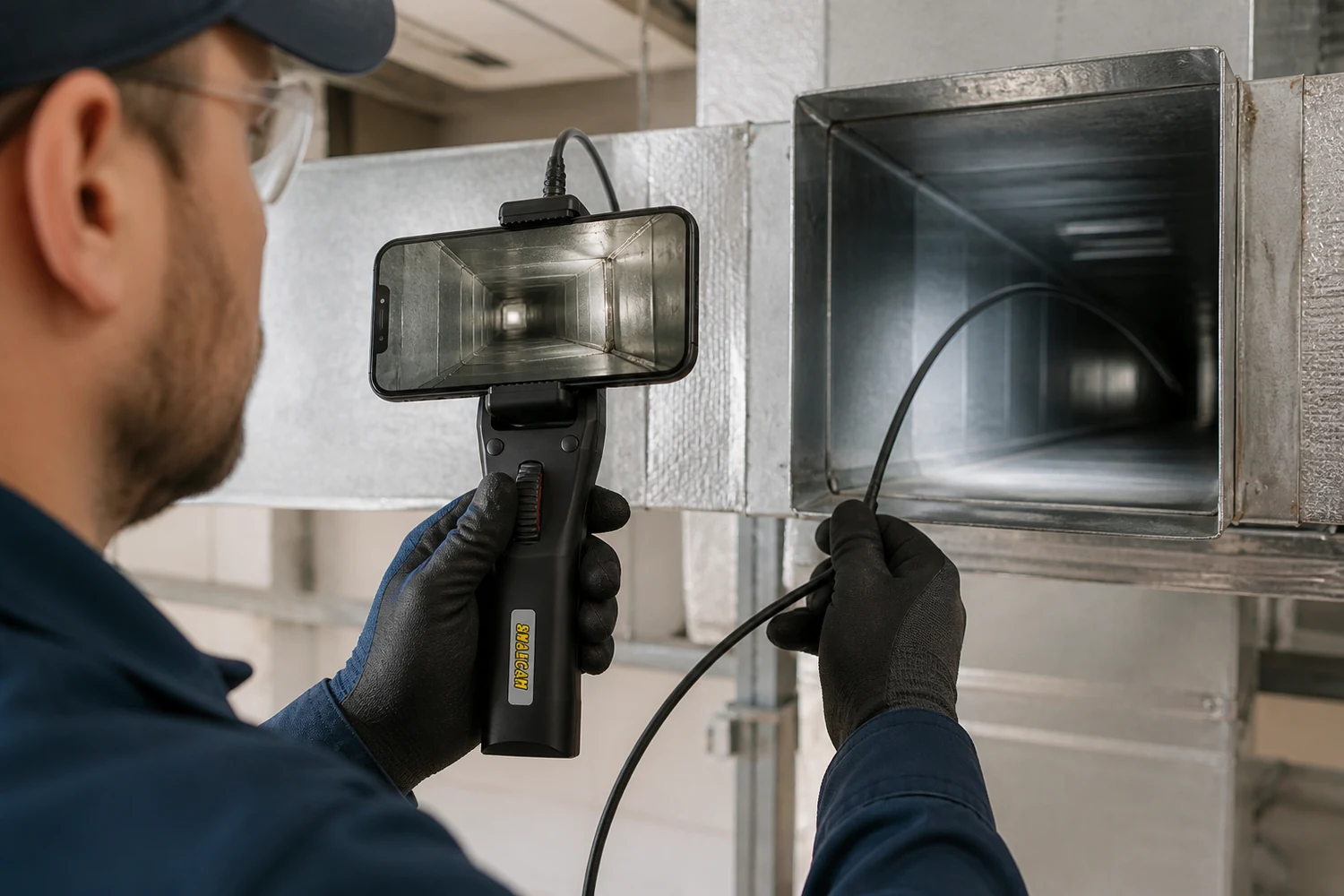
A defensible enquiry for a two-way endoscope should identify model C106/C108S, the required probe diameter, 1 m length, 180° articulation, chosen cable behavior, confirmed resolution, compatible phone environment, and intended inspection scenario. Because alternative values are listed on the page, the supplier should confirm the exact combination on the quotation, sample record, and packaging before volume approval.
These checks make the selection auditable and reduce ambiguity between the listed options. They also help distributors describe each variant accurately without extending product claims beyond the source page. Any requirement for certification, environmental qualification, chemical resistance, software support, or accessory content should be requested and documented separately if it is not explicitly verified on the selected page.
The selected page lists 6.2 mm and 8.5 mm options. Buyers should specify the required diameter and confirm the complete configuration before ordering.
The declared values are 180° articulation and a 1 m probe length. Actual suitability depends on the access path, bends, target position, and withdrawal clearance.
The product detail states that the handle supports one-click photo capture and video recording. A compatible phone remains part of the viewing and file workflow.
The page lists a flexible soft cable and a semi-rigid tube. Selection should be based on routing, support, steering control, and retrieval needs.
No. The image documents a visual condition, while acceptance limits and service decisions must come from the applicable maintenance procedure and authorized personnel.
Review the verified product configuration, then discuss probe diameter, cable behavior, resolution, phone compatibility, samples, and the intended inspection route.